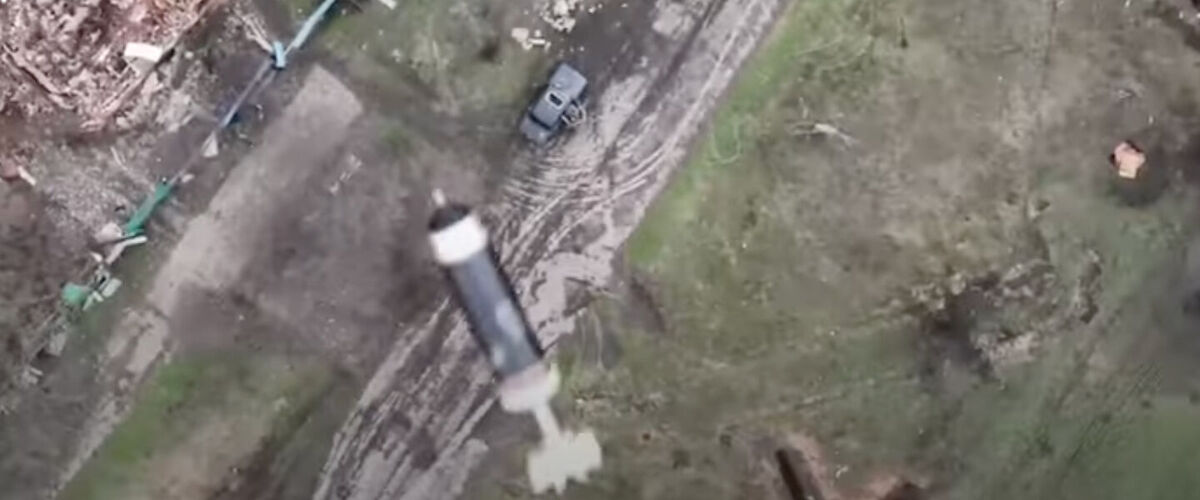
What was once a weekend gadget for filming weddings or flying over the countryside has taken on a far darker role in Ukraine. From cheap DJI drones to modified grenades with 3D-printed fins, ordinary devices are being reimagined as tools of war. This unlikely fusion of leisure tech and battlefield necessity is reshaping how modern conflicts are fought.
From toys to tools of war
It’s a strange thought, isn’t it? The same drones once bought to film a wedding or capture sweeping holiday views are now part of a very different story in Ukraine. While we usually think of military drones as huge, expensive machines with names that sound like video game bosses—the Bayraktar TB-2, for instance, which costs around five million dollars a piece—Ukraine has shown the world that even cheap commercial drones can change the battlefield.
In the early days of the conflict, the Ukrainian government appealed to citizens to hand over their DJI quadcopters and other hobby drones. What followed was a wave of improvisation. According to Valerii Iakovenko, founder of DroneUA, drones have become essential for reconnaissance, artillery targeting and even search-and-rescue operations. With roughly 6,000 reconnaissance drones buzzing over fields and cities—kept online thanks to Starlink satellite connections—Ukraine has turned a simple hobby into a tool of survival.
Самодельный механизм сброса обеспечивает высокую точность — смотрите на видео. А онлайн-съемка позволяет в том числе вести разведку. Получается дешевое и эффективное оружие против отдельных солдат pic.twitter.com/kmubVUuGdB
— IanMatveev (@ian_matveev) April 29, 2022
The art of battlefield improvisation
Of course, reconnaissance is just the start. In a conflict where resources are stretched and innovation is key, Ukrainian operators have taken things further—by converting off-the-shelf drones into makeshift grenade launchers.
Take the widely sold Phantom 3, a drone you could once pick up in a shopping centre. Videos circulating online show it fitted with a home-made release mechanism capable of dropping small explosives. Military observers suggest many of these are Soviet-era VOG-17 fragmentation grenades, which have been modified with 3D-printed fins for stability. Weighing just 350 grams, they can’t take out tanks, but they are lethal enough against infantry caught in the open.
It’s not just Ukraine, of course. Analysts point out that similar techniques were seen in Iraq and Syria, though never on this scale. The sheer availability of consumer drones in Ukraine, combined with desperate necessity, has accelerated their transformation from gadgets into weapons.
Low cost, high impact
The economics of this shift are striking. A Phantom drone costs in the region of 500 dollars. An adapted grenade? Under 100. Compare that to a Russian BMP-3 infantry fighting vehicle, which comes in at nearly 800,000 dollars before you even count the crew. As one analyst dryly noted, the cost-effectiveness ratio is extraordinary.
And Ukraine hasn’t stopped at small drones. As early as 2020, tests were carried out with heavy-duty octocopters capable of carrying anti-tank grenades and mortar shells. It’s warfare on a budget, and it seems to work.
By now, many will have seen the video of a Ukrainian drone dropping a small bomb through the sunscreen (!) of a car driven by Russian soldiers. Here’s a short thread on how it was done (with thanks to @ian_matveev, on whose thread this is based). /1 https://t.co/EIm3aW1nWn
— ChrisO_wiki (@ChrisO_wiki) May 1, 2022
The future of drone warfare
There is something unsettling about this. What began as children’s toys and photographers’ playthings now hum overhead in war zones. DJI, the Chinese company behind many of these drones, has since withdrawn from both Russia and Ukraine, wary of being tied to the conflict. But the lesson remains: modern war no longer belongs solely to governments and generals. With a bit of ingenuity and a lot of necessity, even a birthday gift drone can be re-engineered into a weapon.
It’s a reminder, too, that the battlefield is shifting in unexpected ways. As technology becomes cheaper and more accessible, the line between the civilian and the military blurs. In Ukraine, that line is already crossed, one 3D-printed fin and one grenade at a time.