Far above the clouds and well beyond the reach of commercial jets, something unexpected is unfolding — and it’s not good news. NASA’s latest findings shed light on a hidden consequence of climate change that’s quietly reshaping our planet’s upper atmosphere.
A dramatic cool-down in the high sky
Nestled between 50 and 80 kilometres above the Earth’s surface lies the mesosphere — a mysterious layer of our atmosphere rarely discussed outside scientific circles. But thanks to a new long-term study, it’s getting the attention it deserves. Using two decades’ worth of satellite data, NASA researchers have uncovered that this upper layer is not just cooling — it’s shrinking.
It’s a curious twist: while greenhouse gases (GHGs) trap heat in the lower atmosphere and warm the surface, they have the opposite effect higher up. In the mesosphere, they cause temperatures to drop, drastically. We’re talking about a 1 to 2°C decrease per decade, which might not sound like much until you factor in the altitude. Alongside the cooling, the layer is contracting by up to 200 metres every ten years — a subtle but significant shift.
Why this matters — even from space
This collapse of the mesosphere isn’t just a fascinating tidbit for climate scientists. It has real implications — particularly for low-Earth orbit satellites. As the air thins at those heights, the drag on satellites decreases, meaning they don’t slow down or drop out of orbit as quickly as before. That may sound like a bonus, but it complicates trajectory planning and increases the risk of space debris lingering longer than it should.
For agencies managing everything from weather satellites to global internet coverage, this changing drag dynamic could mean recalibrating entire fleets. Over time, even space missions could feel the ripple effects of what’s happening hundreds of miles above our heads.

The strange beauty of noctilucent clouds
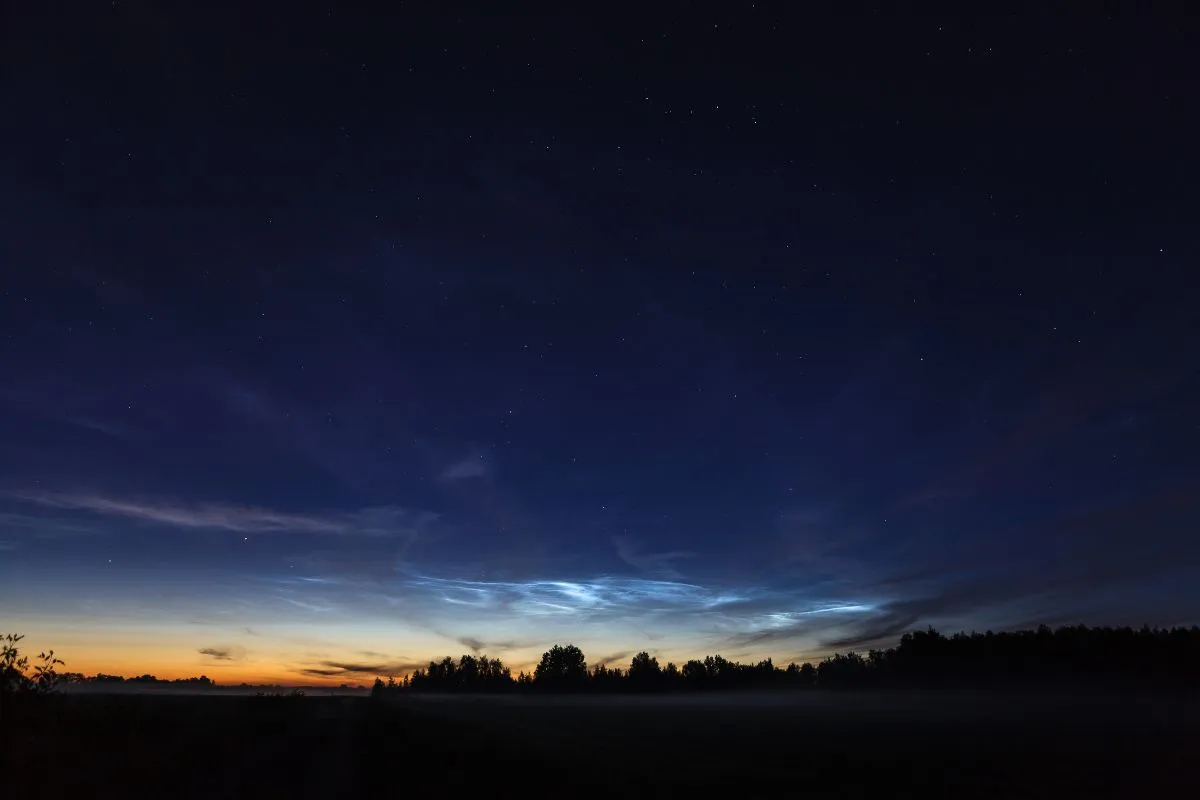
One of the more visually striking signs of this upper-atmospheric chill is the increasing appearance of noctilucent clouds. These shimmering, electric-blue formations typically show up near the poles, high in the mesosphere. But now, they’re being spotted at much lower latitudes.
As dazzling as they are, their rise points to an environmental imbalance. These clouds form when water vapor freezes around dust particles in the cold upper atmosphere — a process made more likely by the ongoing cooling trend. Though stunning to photograph, they also reflect how far-reaching our climate impact has become: from rising seas to glowing clouds in the night sky.
A wake-up call from above
The mesosphere may seem like a distant frontier, but its slow collapse is yet another warning sign that Earth’s delicate systems are off balance. While the direct effects may be most visible in the skies and space, the underlying cause is the same one we see in rising temperatures and extreme weather events: the unchecked build-up of greenhouse gases.
NASA’s findings serve as both a scientific milestone and a call to action. Climate change isn’t just about the things we can see and touch — it’s rewriting the physics of our entire planet, from its deepest oceans to the fringes of space. Understanding these changes now could be key to protecting not only our environment but the very infrastructure that keeps our modern world running.