A newly discovered marine creature, Mosura fentoni, has stunned scientists by offering a rare glimpse into the early evolutionary stages of life on Earth. With its striking three eyes and unique features, this ancient species is reshaping what we know about the diversity of life in Earth’s oceans over 500 million years ago.
A Fascinating Discovery in the Burgess Shale
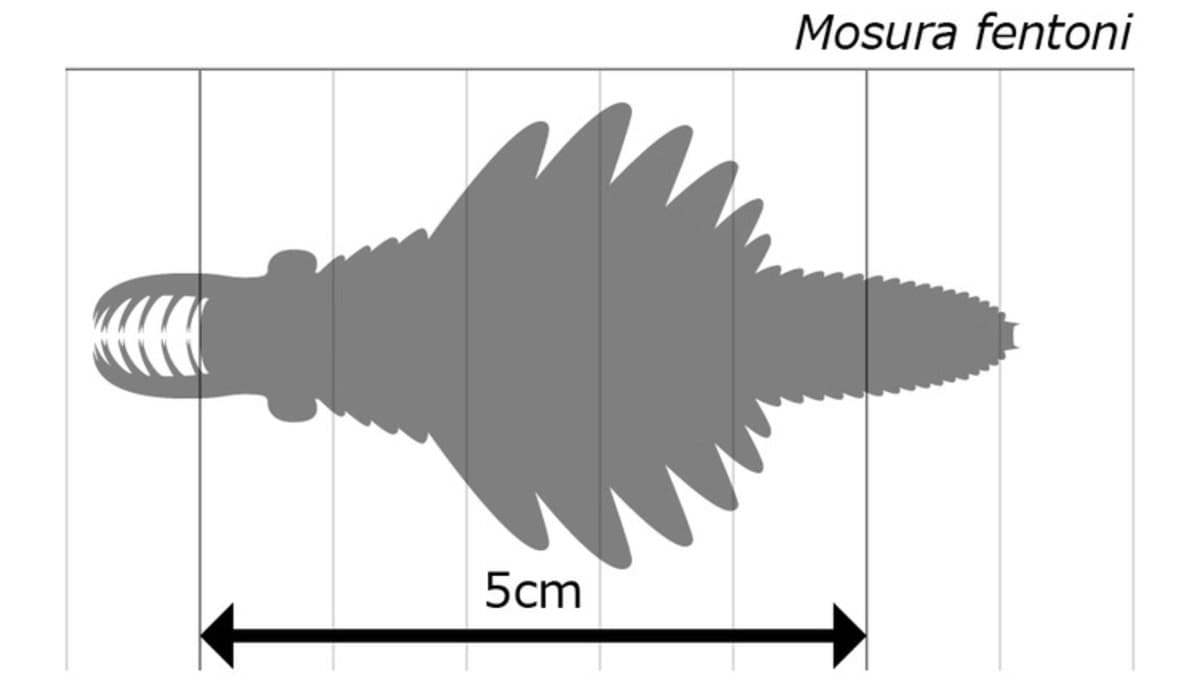
In the remote Burgess Shale fossil beds of British Columbia, Canada, paleontologists have uncovered an astonishing creature: Mosura fentoni. This ancient marine animal, about the size of a human index finger, lived more than 500 million years ago during the Cambrian period—a time when life on Earth was rapidly diversifying. The fossil, which was first identified between 1975 and 2022, is turning heads with its unusual combination of features that link it to early arthropods like radiodonts.

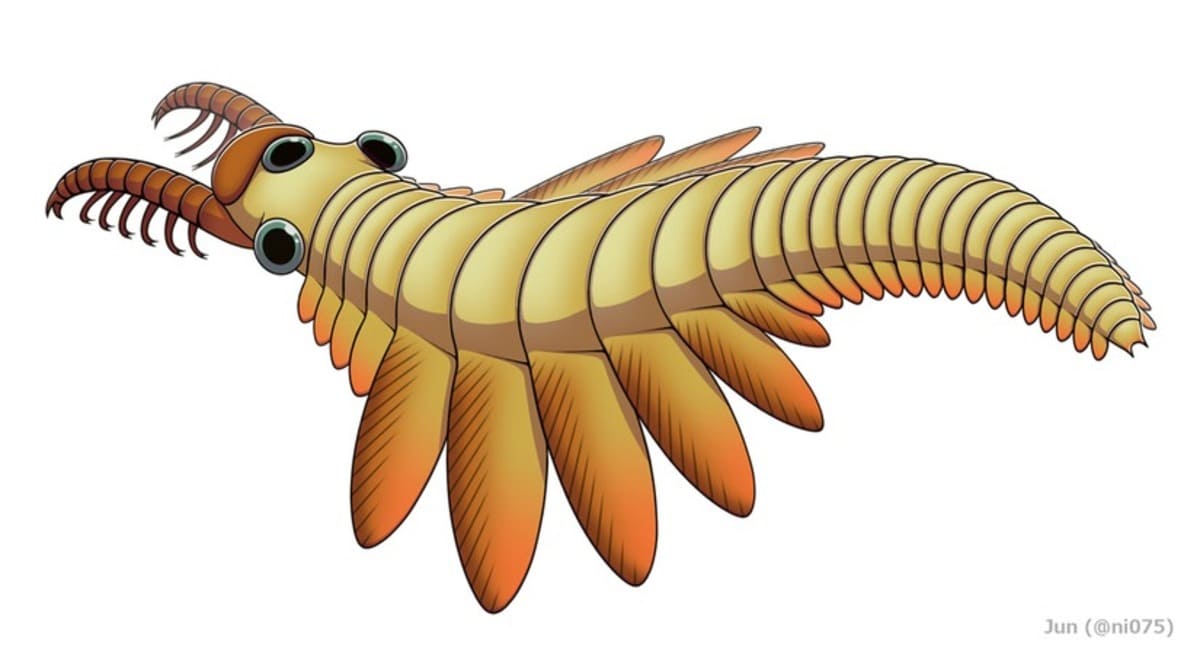
What truly sets Mosura apart from its prehistoric relatives is its three eyes. While three-eyed creatures may sound like something out of a sci-fi movie, Mosura’s three eyes are a real evolutionary marvel. These eyes offer new insights into how early marine animals developed their sensory systems. Alongside the eyes, the creature had spiny jointed claws, a circular mouth lined with sharp teeth, and wide swimming flaps along its body. All these features made it a top predator in the seas of its time, showcasing the complex and innovative ways that evolution took shape long before modern life forms appeared.
The Surprising Features That Stunned Scientists
One of the most jaw-dropping aspects of Mosura was its tail. Unlike other radiodonts, which had simple tails, Mosura’s tail was narrow, segmented, and lined with gill structures. These gill-bearing segments were so similar to those found in modern arthropods—like horseshoe crabs and woodlice—that scientists were left in awe.
Voir cette publication sur Instagram
Joe Moysiuk, the lead researcher on the study, called this feature an example of “evolutionary convergence.” This phenomenon occurs when distant species evolve similar traits to solve similar problems. In Mosura’s case, its segmented tail was likely an adaptation to help it efficiently extract oxygen from the water. This unique feature emphasizes how early arthropods were already exhibiting traits that we associate with modern creatures—traits that had evolved millions of years earlier than we once thought.
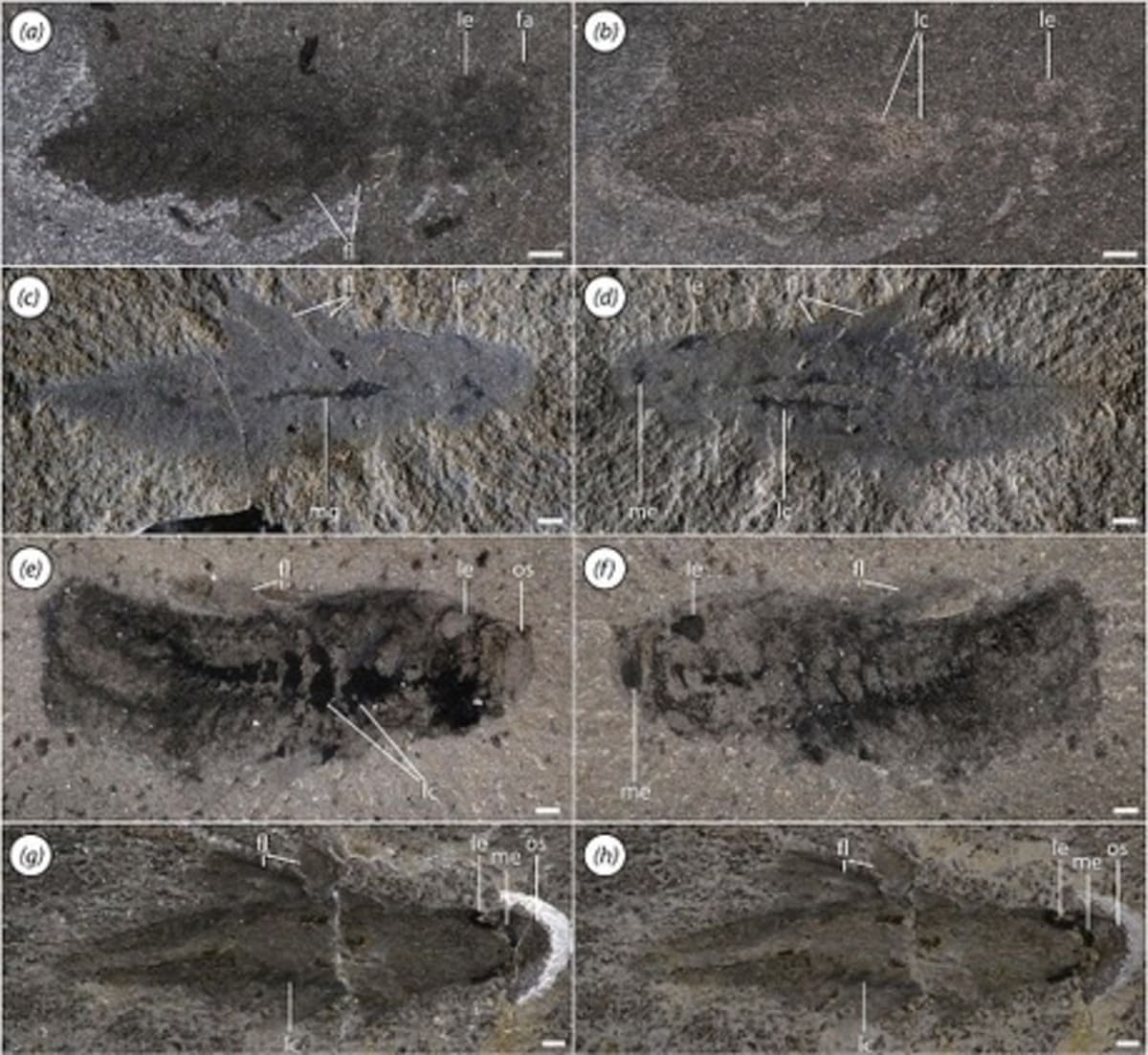
But the surprises didn’t stop there. The preservation of Mosura’s soft internal anatomy—nerves, digestive organs, and parts of its circulatory system—was so detailed that paleontologists were able to study them under different lighting conditions. This level of preservation is rare for fossils of this age, and it allows scientists to make direct comparisons between Mosura and its living descendants.
As Jean-Bernard Caron, a co-author of the study, explained, “Very few fossil sites in the world offer this level of insight into soft internal anatomy. The details are astounding.” Indeed, Mosura’s well-preserved soft tissues offer a window into the distant past, shedding light on how complex life forms began to evolve in the oceans.
A Window Into the Evolution of Early Marine Life
The discovery of Mosura fentoni is more than just a chance to learn about a single creature—it’s also an opportunity to better understand life’s evolutionary history. The Cambrian period was a time of explosive growth in marine biodiversity, and Mosura’s features are helping scientists piece together how early arthropods adapted to their environment.
Radiodonts, the group to which Mosura belongs, were some of the first arthropods to emerge during the Cambrian. By studying these creatures, researchers gain key insights into the evolution of modern arthropods, including insects, spiders, and crustaceans. What makes Mosura even more fascinating is that its traits appear to have evolved along similar lines as those seen in modern-day arthropods, suggesting that the evolutionary paths of ancient and modern species may not be as distant as we once believed.
Voir cette publication sur Instagram
As Caron notes, “The new species emphasizes that these early arthropods were already surprisingly diverse and were adapting in a comparable way to their distant modern relatives.” This discovery could change the way scientists view the timeline of arthropod evolution, pushing back the origins of key traits and offering new clues about how life forms adapted in early Earth’s oceans.
What Mosura Tells Us About Life 500 Million Years Ago
Mosura’s discovery is not just a breakthrough for paleontology; it also offers a deeper understanding of how life evolved during a critical period in Earth’s history. The fossil provides a glimpse of the diversity of early marine life and highlights the complexity of the evolutionary processes that led to the modern creatures we see today.
The creature’s circulatory and respiratory systems suggest that modern arthropod features, such as gills and segmented bodies, evolved much earlier than previously thought. For researchers, this opens up exciting new avenues for understanding the connections between ancient species and their modern descendants.
@lindsaynikole the series is back in a longer format !! #prehistoric #animals #evolution #cambrian ♬ Heretic – Oli XL
Looking ahead, this discovery will likely inspire further research into the fossils of the Burgess Shale, which continues to yield incredible insights into life from the distant past. For those who want to see Mosura up close, a specimen will be displayed at the Manitoba Museum in Winnipeg in 2025. Until then, the creature’s story serves as a powerful reminder of how much we have yet to learn about the ancient life forms that once populated Earth’s oceans.