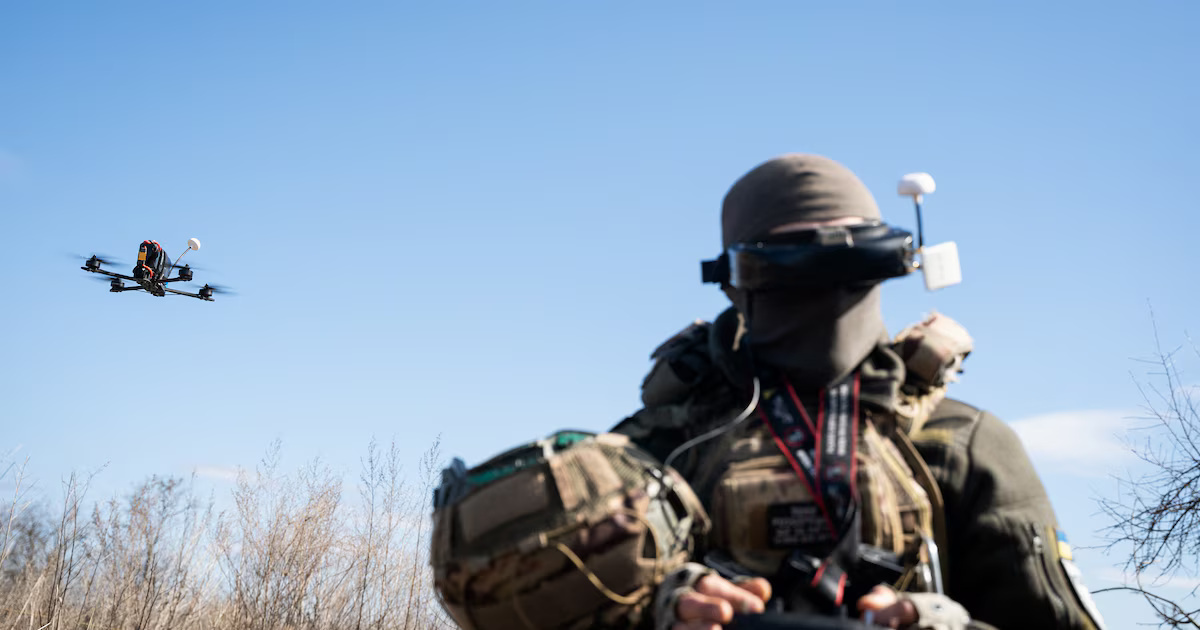
Once seen as niche gadgets, drones are now rewriting the rules of war. From the skies over Ukraine to the depths of the Black Sea, these agile, cost-effective machines are not just supporting combat — they’re leading it. And militaries around the world are scrambling to keep up.
Drones in action: fast, cheap and deadly
On a scorching day at a French training camp, a small team of soldiers tests a new kind of battlefield tactic. Spotting an enemy tank half a kilometre away, they launch a reconnaissance drone, followed by two high-speed FPV (first-person view) models. Within seconds, one slams into the turret — a precise, targeted strike. It’s a simulation, but in a real-world scenario, the resulting explosion could’ve taken out the tank and its ammunition in one blast.
These FPV drones — affordable, fast, and dangerously precise — are being trained on at scale. Soldiers are taught to assemble them, fly them, and even print spare parts with 3D printers. “Tinkering is part of the job,” jokes one instructor. But it’s serious business. By next year, France plans to open more training sites, preparing thousands of troops for a new age of drone warfare.
A game-changer on the global stage
The turning point was Ukraine. After experimenting with drones in the 2020 Nagorno-Karabakh conflict, the Ukrainian front exploded with innovation. In June alone, a coordinated drone assault took out four Russian airbases and over 20 aircraft — including strategic bombers.
What made this possible? Mass production, low cost, and brutal efficiency. Ukrainian forces expect to buy 4.5 million drones in 2025 — up from 1.5 million the year before. Each unit costs roughly $500, far cheaper than artillery shells and often more effective. In fact, recent data suggests drones are responsible for 65% of Russian casualties and 75% of vehicle losses.
These aren’t just numbers — they reflect a tactical revolution. Traditional tanks, designed to fend off direct hits, are now vulnerable to top-down drone strikes targeting weak points like the turret joint. As one defence analyst put it, “Tanks weren’t built for this kind of fight.”
Scrambling to respond
Militaries have had to get creative — and fast. In Ukraine, tanks are now shielded with makeshift cages and logistics routes draped in anti-drone nets. At the same time, electronic warfare is booming. Jammer systems designed to disrupt drone signals are now standard on the front line, disabling up to 70% of enemy drones before they strike.
The arms race is speeding up. Russia has rolled out tethered drones — immune to jamming because they stay connected to their operator via fibre optic cable. It’s a game of cat and mouse: for every drone innovation, a countermeasure quickly follows. Experts say this kind of rapid evolution hasn’t been seen since the introduction of gunpowder or tanks.
Air, land and now sea
But the revolution isn’t just airborne. In the Black Sea, Ukraine’s naval drones have dealt devastating blows, sinking a third of Russia’s local fleet. These unmanned speedboats, guided via satellite networks like Starlink, have also been used to attack the strategic Kerch Bridge and even launch missiles at enemy fighter jets — a first in military history.
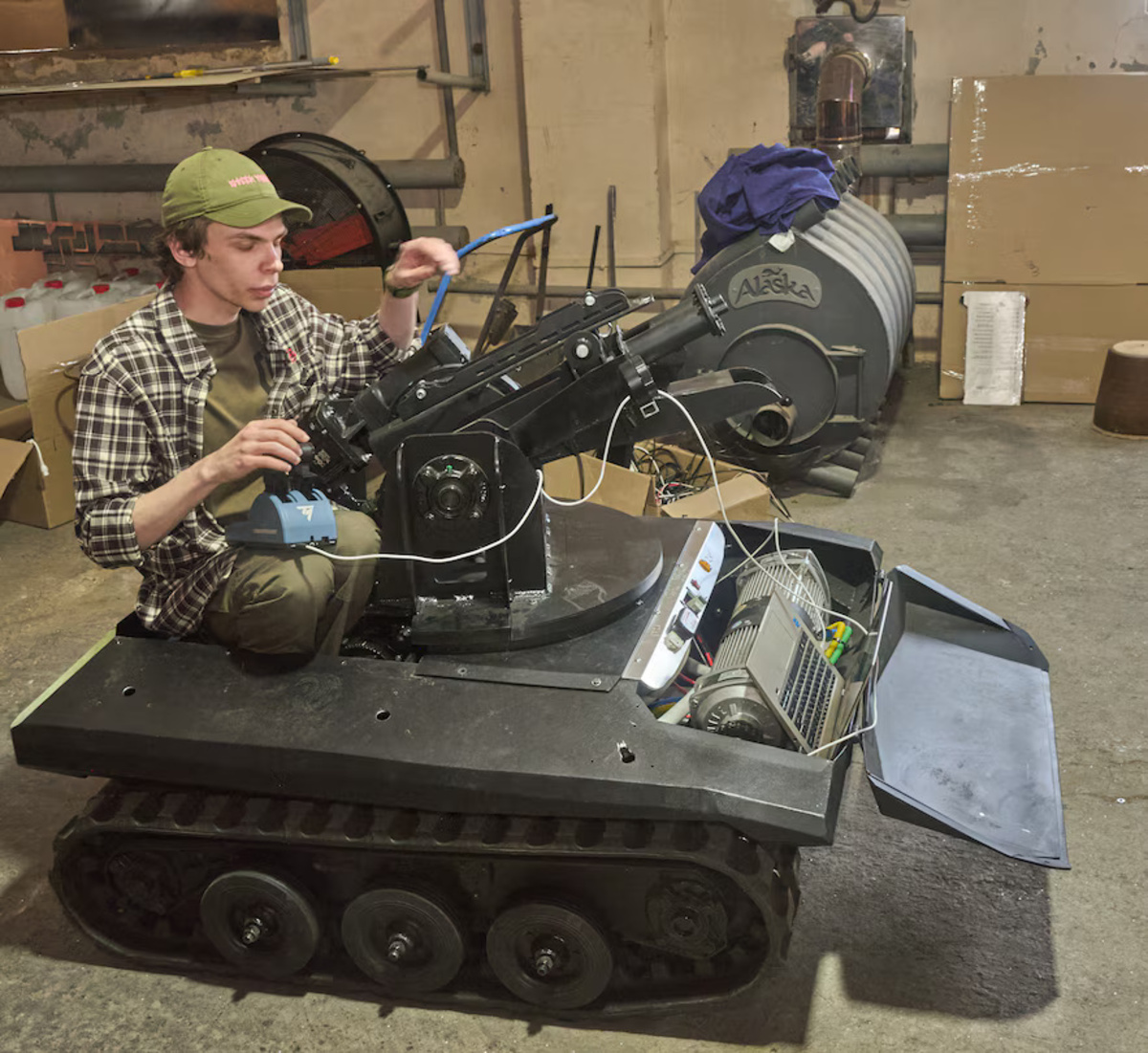
Meanwhile, land-based drones are being tested to clear mines and conduct stealth operations across contested territory. With AI and automation progressing at speed, we’re inching towards a future where drone operations might be entirely autonomous.
The future is already here
France, once a pioneer in drone development, has struggled to keep pace. Earlier efforts like the EuroMALE project floundered due to industrial disagreements. Today, the more agile FPV models are proving far more effective and easier to produce. Even now, tests are underway for new variants and tactics at bases like Caylus.
A new generation of soldiers is emerging — tech-savvy, quick to adapt, and fully trained in this next-gen warfare. “Drones are the weapon of tomorrow,” says one young officer, fresh from drone school. But for those on the Ukrainian frontlines, that future has already arrived.