
It may sound like something out of a sci-fi movie, but NASA just pulled off a feat that brings the idea of a galactic Internet one step closer to reality. For the first time ever, a laser transmitted data across 16 million kilometers—roughly 40 times the distance between Earth and the Moon—and it reached our planet successfully. The signal, carried by light and not traditional radio waves, could reshape how we communicate with future missions on Mars and far beyond.
A Historic Leap in Space Communication
NASA’s latest achievement marks the longest laser-based transmission ever completed in space. Historically, deep-space communications have relied on radio waves, which are reliable but limited in speed and capacity. With the successful use of near-infrared lasers, we’re entering a new era—one where data from deep space can flow faster and in far greater volumes.
This milestone is part of NASA’s Deep Space Optical Communications (DSOC) experiment, an initiative designed to test whether light can carry messages more efficiently through space. And so far, it’s working. The test, nicknamed “first light,” isn’t just a cool name—it’s a major turning point in how we’ll handle space communications in the decades ahead.
Why Use Lasers Instead of Radio Waves?
Lasers might not be new tech here on Earth, but in space, they offer game-changing advantages. Because a laser beam is highly focused, it suffers less energy loss and is less prone to interference or eavesdropping. It’s also incredibly efficient—lasers require far less power than traditional transmitters, a huge benefit when you’re relying on the limited energy onboard a spacecraft.
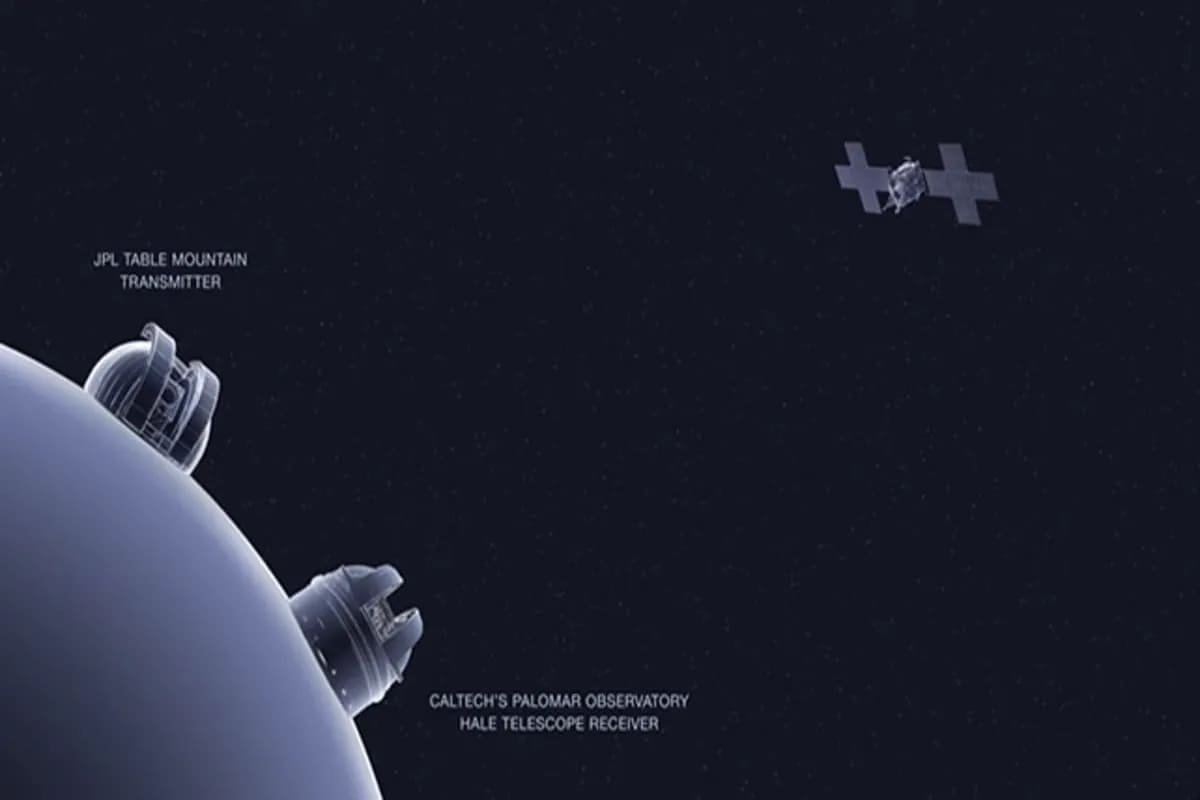
In this case, the laser encoded data into photons, which were then picked up by highly sensitive superconducting detectors on Earth. Timing was everything: both the spacecraft and the ground telescope were moving at tens of thousands of kilometers per hour. The precision needed to align them is comparable to hitting a bullseye from the other side of the planet while both you and the target are sprinting.
A Network Is Already Taking Shape
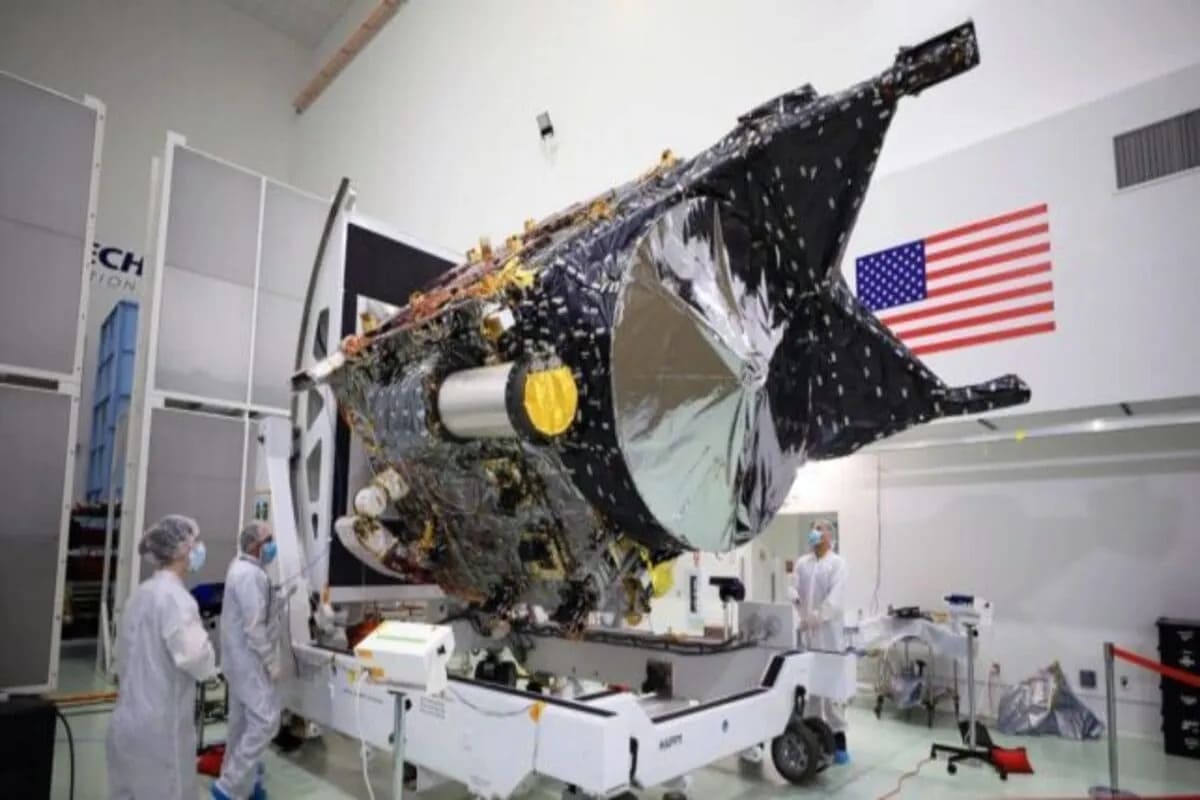
The signal came from Psyche, a NASA spacecraft currently en route to an asteroid belt between Mars and Jupiter. During the test, it beamed its laser to the Hale Telescope at the Palomar Observatory in California. The laser took just 50 seconds to travel the vast distance.
Psyche’s real mission is to explore a metal-rich asteroid, but it’s also acting as a high-tech test bed for this revolutionary communication system. Over time, NASA plans to refine the method, ensuring it can handle large volumes of data—like video feeds or scientific readings—with speed and precision.
Game-Changer for Mars Missions
Think about what this means: astronauts on Mars could one day livestream their experiments—or even video-call their families—thanks to high-bandwidth laser links. It’s not just about convenience; these high-speed communications could be vital for remote diagnostics, real-time data sharing, and mission-critical coordination.
As Trudy Kortes, NASA’s Director of Technology Demonstrations, put it, “This is just one milestone, but it sets the stage for the kind of communications infrastructure we’ll need as humans venture farther into space.”
The Dawn of an Interplanetary Internet
If this tech continues to evolve as expected, we could be heading toward an interplanetary Internet—one that links bases on Mars, spacecraft in transit, and even future colonies on distant moons. That might sound bold now, but so did wireless phones and video chats just a few decades ago.
For now, this laser message from millions of kilometers away is more than just a technical triumph. It’s a reminder that distance no longer needs to limit connection. Each breakthrough brings us closer to an era when sharing knowledge, visuals, and even emotions across the stars is just another part of daily life.