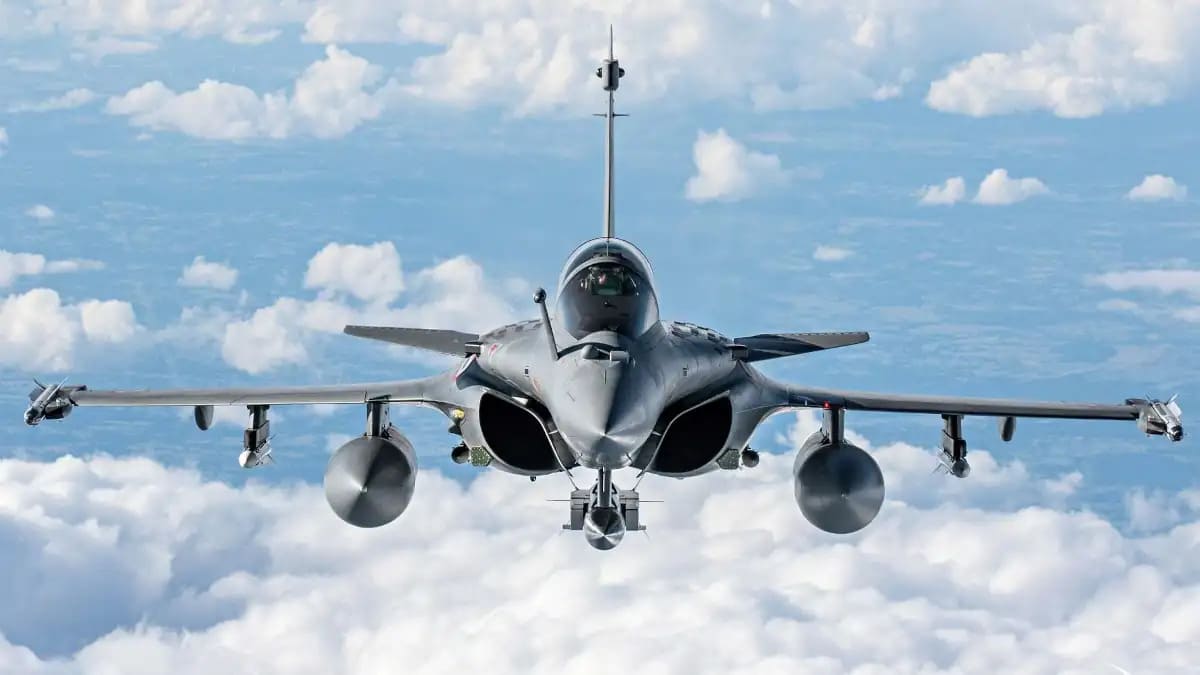
France’s Rafale fighter jet has long been a symbol of European military might and industrial success. But as Beijing turns up the heat, the race for influence in global defence markets is no longer just about the hardware—it’s about shaping the narrative, and China is playing the long game.
A French success that’s ruffling feathers
With over 500 Rafale jets ordered worldwide, including 273 sold abroad, France has carved itself a sizeable niche in the global defence industry. The jet’s sleek design, cutting-edge avionics and proven combat performance have made it a favourite in Asia, particularly in India and Indonesia. For Dassault Aviation and the French government, this export boom is both an economic win and a boost to international prestige.
But not everyone is cheering from the sidelines. In Beijing, the success of the Rafale hasn’t gone unnoticed—and it’s prompting a more aggressive push to challenge France’s foothold in the region.
Shadow diplomacy and digital warfare
This isn’t your typical battle of specs and speed. China has been quietly reaching out to Rafale’s current and potential customers—subtly casting doubt on the jet’s abilities while promoting their own military hardware. It’s not so much about outright confrontation, but rather a whisper campaign, backed by a sophisticated online influence strategy.
Through fake accounts, doctored images, and selective snippets of military footage, social media is being used to reshape perceptions of what’s superior in the skies. It’s no longer enough to build a fast jet—you need to win the battle of public opinion too.
A turning point in South Asia
The catalyst for this narrative war came from a recent military flare-up between India and Pakistan. According to reports, a Rafale was downed during operations—marking its first known combat loss. While the full story remains murky, China was quick to use the incident as a strategic talking point, particularly as they’ve supplied PL-15 long-range missiles to Pakistan.
This subtle shift in the balance of power was more than just a tactical footnote—it became a powerful argument for Chinese technology. The message? That raw performance isn’t everything—modern warfare demands adaptable systems, supported by intelligence, training, and local partnerships.
Undermining influence, not just exports
France’s strength lies in its engineering excellence—but China is betting that its own edge may lie in geopolitical positioning and long-term regional engagement. By highlighting perceived vulnerabilities and downplaying French successes, China hopes to cast doubt on future deals—especially with countries like Indonesia, which is currently eyeing a follow-up order of 24 Rafales.
For Beijing, this isn’t just about planes—it’s about reshaping alliances and ensuring Chinese defence products become the new default choice for rising powers in the Global South.
A new era of defence competition
The days when military superiority was measured only by specs and payloads are behind us. Today, the real contest is unfolding both on airfields and in digital feeds. France’s Rafale remains a formidable aircraft, but China is rewriting the playbook—blending diplomacy, technology, and perception management into a new kind of strategic warfare.
If there’s one thing this evolving rivalry makes clear, it’s that the future of military dominance may depend just as much on narrative control as on aerial manoeuvres. And in that arena, China is fast becoming a force to be reckoned with.