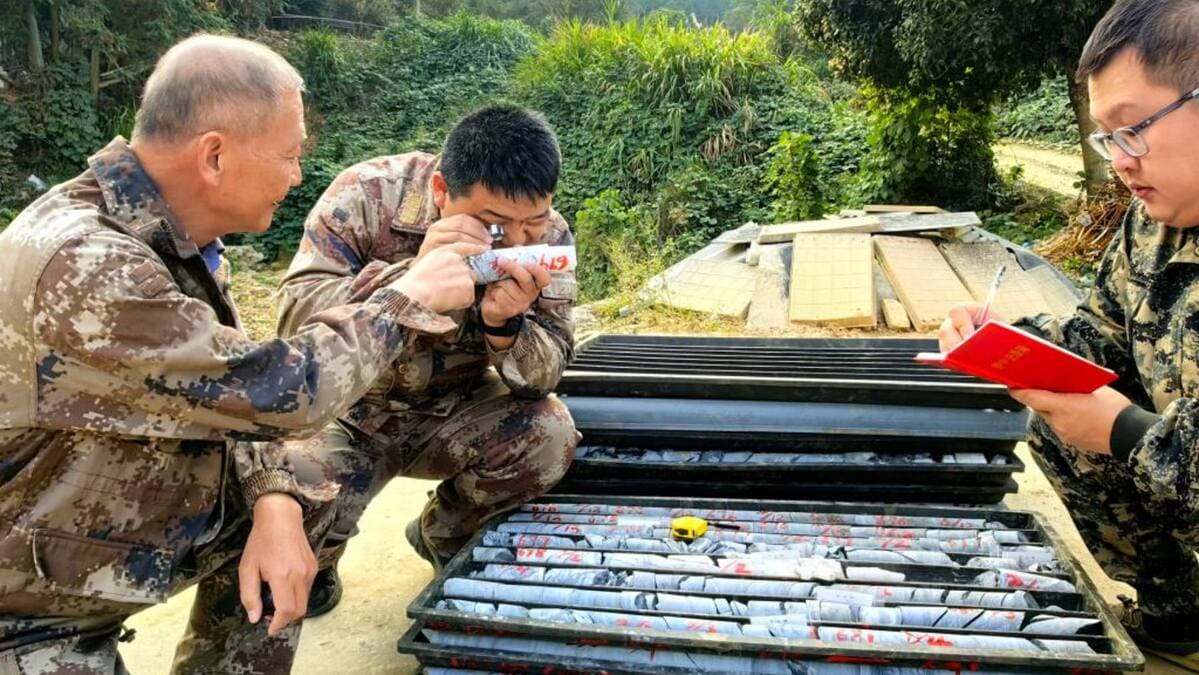
In a move that could send ripples through global markets and reshape the balance of power in precious metals, China has uncovered one of the world’s largest known gold deposits. With reserves estimated at 1,000 metric tons, this is more than just a mineral find—it’s a strategic pivot with global implications.
A Record-Breaking Find in Hunan Province
In Pingjiang County, located within China’s Hunan province, geologists have identified an extensive high-grade gold vein that could redefine the global gold supply. The discovery, confirmed by the Hunan Geological Bureau, includes over 40 individual veins, each boasting an average of 138 grams of gold per metric ton—an exceptionally rich yield.
What makes this find particularly remarkable is the depth of mineralization, extending as far as three kilometers below the surface. That depth, coupled with the ore’s quality, positions this deposit among the most significant in recorded history.
Markets React to China’s Growing Dominance
While commercial extraction is still years away, the announcement has already stirred financial markets. China, already the world’s largest producer of gold, stands to increase its geopolitical and economic leverage by securing control over an even larger share of the global gold supply.
With more than 2,000 tons already in official reserves, this new deposit could push China’s hold on global gold to over 15%, drastically reducing its reliance on foreign sources and strengthening its monetary independence.
Strategic Reserves and Global Impact
Gold remains a cornerstone of financial stability. As global economies face inflationary pressures and shifting currency dynamics, expanding gold reserves provides countries with a crucial hedge against volatility.
John Reade, senior market strategist at the World Gold Council, expressed cautious optimism about China’s 1,000-ton projection, noting that while it’s ambitious, translating such a large deposit into actionable reserves is a complex process.
A Geologic Jackpot in the Yangtze Belt
The Pingjiang discovery lies along the Yangtze tectonic belt, a geologically active region known for its rich mineral deposits. The formation of this particular vein stems from millions of years of hydrothermal activity, where mineral-rich fluids filled cracks in the earth’s crust, crystallizing into gold.
While this process is common in mining geology, the concentration and depth found in this case are extraordinary.
The Role of AI in the Discovery
In a striking twist, artificial intelligence played a critical role in unearthing the deposit. Using a combination of AI-guided drilling, seismic mapping algorithms, and high-resolution spectral analysis, geologists were able to identify gold-rich zones that traditional methods might have missed.
This signals a new era in exploration, where advanced technology is becoming just as vital as traditional geological expertise.
Environmental and Social Challenges Ahead
Mining at such depths introduces significant environmental risks—from managing acidic groundwater to balancing energy demands and maintaining local ecological health. Local NGOs are already calling for transparency, urging authorities to ensure that rural communities are protected and consulted throughout the development process.
The pressure is on to show that large-scale extraction can be conducted with minimal disruption, especially in regions where community life and ecosystems are closely intertwined.
A Boost for High-Tech Industries
Beyond its financial value, gold is an essential material in cutting-edge technologies. From high-performance semiconductors to emerging fields like quantum computing and nuclear fusion, the demand for gold extends far beyond bullion and jewellery.
By securing a massive domestic supply, China could gain a technological advantage in sectors where gold’s properties—particularly its conductivity and corrosion resistance—are irreplaceable.
More Than Just a Safe Haven
Traditionally viewed as a store of value during economic downturns, gold is now a crucial component in everyday electronics. Your smartphone, laptop, and even the servers running global data networks all rely on gold for efficient performance.
With the Pingjiang discovery, China may be positioning itself not just as a guardian of gold reserves, but as a gatekeeper to next-generation tech.
The Start of a New Gold Era?
What began as a single exploratory drill could evolve into the biggest gold rush of the 21st century. While much depends on how this deposit is developed—and how responsibly it’s managed—there’s no denying the scale of what’s been uncovered.
As the world watches Pingjiang, the conversation isn’t just about gold. It’s about influence, innovation, and the evolving role of critical minerals in shaping the global future. This is more than a discovery—it’s a turning point.