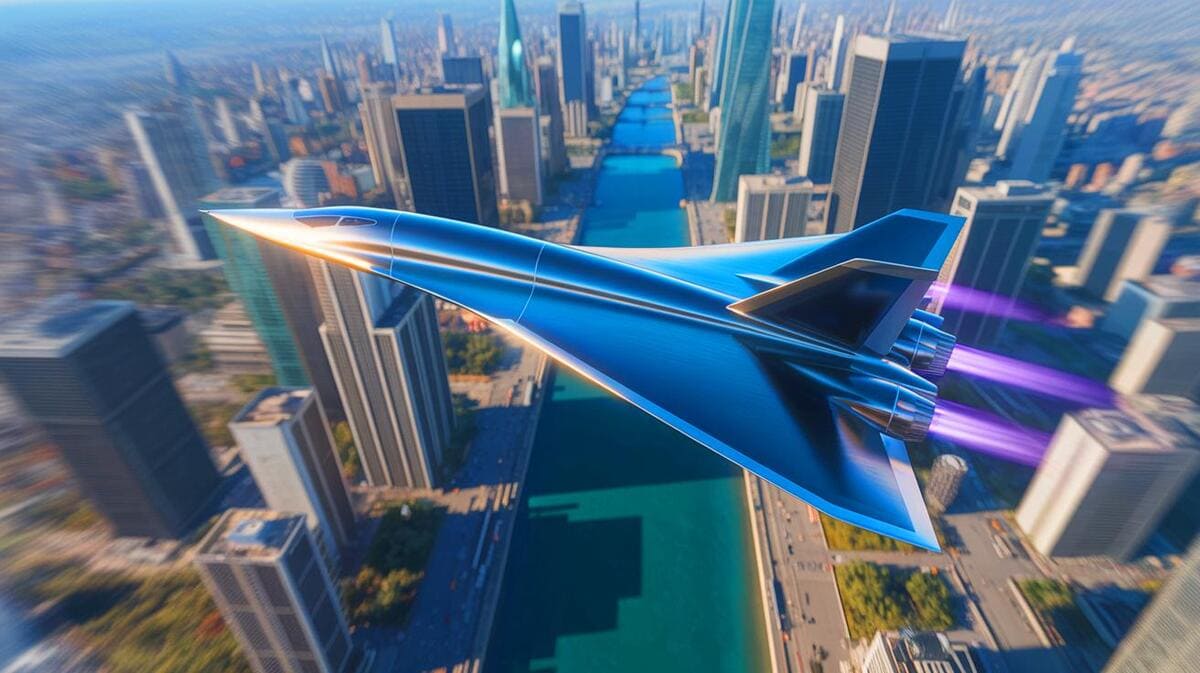
When I first heard about Beijing’s new MD-19 prototype, I pictured a scene from a sci-fi blockbuster—until I realised this wasn’t fiction but the dawning of a new aviation era. At Mach 16, the rules of engagement and global travel may never be the same.
The MD-19’s revolutionary propulsion
China’s engineers have resurrected the long-abandoned detonation wave engine, refining it into a reliable scramjet that delivers 70% more thrust while burning 30% less fuel. I once chatted with a pilot friend who likened early scramjets to wild horses—powerful but uncontrollable. By contrast, the MD-19’s stable combustion and advanced composite ceramics now withstand temperatures above 3,000 °C, letting the aircraft slice through the sky at hypersonic speeds once thought impossible.
Military implications: rewriting deterrence
At sixteen times the speed of sound, the MD-19 can reach any point on the globe in under an hour, rendering existing air defences obsolete. Imagine a weapon whose kinetic energy rivals a small nuclear device, yet carries no warhead—its mere impact would level a target. Such capability transforms the concept of global strike and sidesteps current arms treaties, forcing a fundamental rethink of Western military doctrines that still rely on slower interceptors and missiles.
Economic disruption: a new logistics order
Beyond its battlefield role, the MD-19 could revolutionise logistics. Picture urgent cargo moving from Shanghai to London in a matter of hours—traditional ports and freight carriers would scramble to keep up. Companies like FedEx might find themselves upended by a fleet of hypersonic freighters, while elite travellers could cross continents in the time it takes most of us to plan a weekend getaway. Supply chains would shift dramatically toward hubs with hypersonic infrastructure, most likely centred in China.
An urgent Western response
Faced with this seismic shift, democracies must launch a technology sprint of their own—mobilising talent, creating innovation zones, and securing critical supply lines. My colleague in aerospace R&D often warns that once key industries move offshore, it’s almost impossible to rebuild them at home. Protecting sensitive research and investing heavily in STEM education will be vital if the West hopes to reclaim its lead in the skies.
China’s MD-19 stands as both a technical marvel and strategic game-changer. The coming months will test whether global powers can adapt swiftly, or whether we’ll watch from the sidelines as hypersonic dominance reshapes our world.