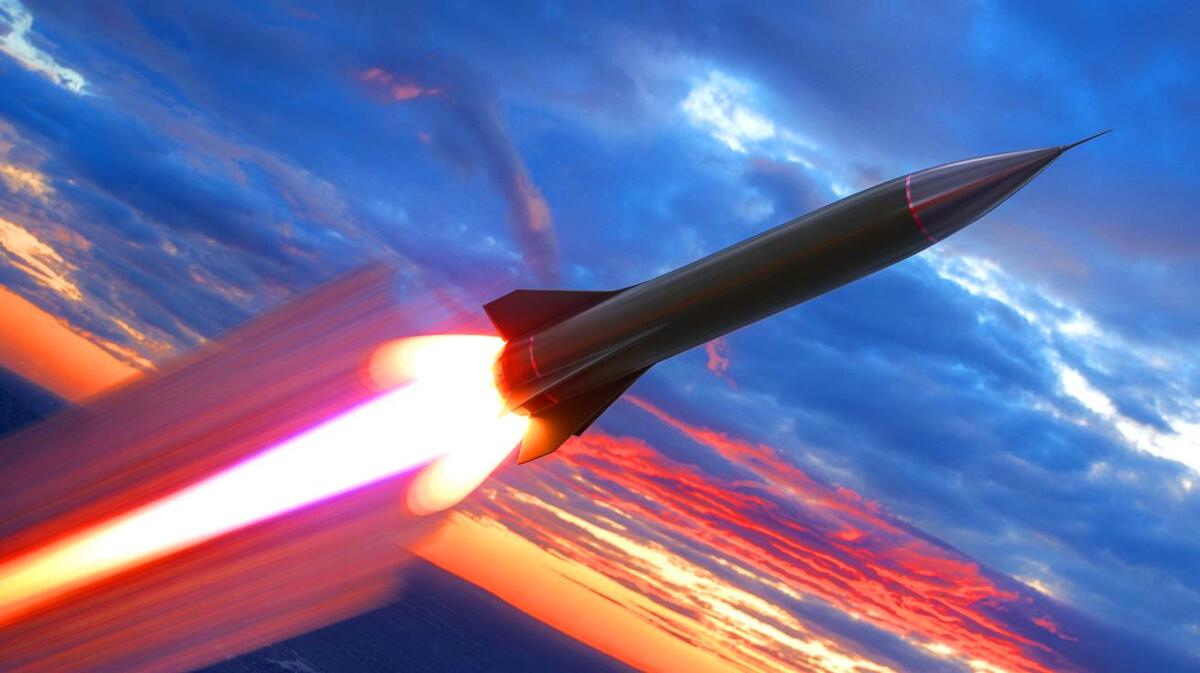
It sounds like something straight out of a science fiction film—a missile that can travel halfway around the globe in the time it takes to watch a sitcom. But that’s exactly what’s being claimed about China’s latest hypersonic weapon, which, according to recent reports, reached a jaw-dropping speed of Mach 20 in under 30 minutes. This leap in military tech is setting off alarms around the world.
Hypersonic glide vehicles: a game-changer
At the heart of this development is the hypersonic glide vehicle (HGV), a new breed of missile that’s not just fast—it’s unpredictable. Unlike traditional ballistic missiles, which follow a fixed arc through space, HGVs can manoeuvre mid-flight, making them extremely difficult to intercept.
These weapons can reach speeds between Mach 15 and Mach 20—that’s over 20,000 km/h—putting virtually any global target within striking distance in half an hour or less. Their ability to twist and veer during flight also makes them a nightmare for current defence systems, which rely heavily on tracking predictable paths.
Defence systems face a serious challenge
For all their strengths, hypersonic missiles aren’t entirely invisible. Their infrared signature, for one, can be detected by high-altitude systems. But even when they’re spotted, responding in time is another story. The sheer speed and heat generated as they re-enter the atmosphere pushes current interception technology to its limits.
There’s also a risk on the design side. The structural integrity of these vehicles can be compromised by the extreme pressure and thermal stress of high-speed flight. But those technical hurdles haven’t slowed China down—in fact, they seem to be widening the gap.
Strategic advantage through flexible launch options
One of the more understated advantages of HGVs lies in how flexibly they can be deployed. These aren’t just missiles you fire from silos. Hypersonic weapons can be launched from ground bases, aircraft, or even low-orbit satellites, giving military planners a whole new set of tactical options.
And with China leading the charge, countries like the US and UK are urgently investing in counter-hypersonic technology, from early-warning systems to advanced interceptors. But the West has some catching up to do.
The new arms race has begun
We may be witnessing the dawn of a new era in military strategy—one where speed, adaptability and stealth trump sheer firepower. Hypersonic weapons are not only forcing nations to rethink their defensive architecture, but also pushing them to reconsider how wars might be fought in the not-so-distant future.
If a single missile can outpace every response system and hit its mark in minutes, traditional deterrence strategies may quickly become obsolete. Global defence alliances will need to innovate—and fast—or risk falling behind.
A global challenge demands a global response
There’s no denying it: hypersonic technology is rewriting the rules of warfare. With China currently setting the pace, other nations are facing a stark choice—develop effective countermeasures, or enter into a precarious game of catch-up.
The question now is whether the world can respond not just individually, but collectively. If hypersonic missiles become the new norm, global stability will depend on cooperation as much as competition. In this high-stakes race, being first is no longer about bragging rights—it’s about survival.