In an era where skies are the ultimate arena for modern combat, the 2025 global air force rankings bring both familiar leaders and unexpected upstarts. Compiled from the International Institute for Strategic Studies’ Military Balance 2025, this list reflects more than just fleet counts—it highlights the cutting-edge technologies reshaping aerial warfare. As nations race to deploy next-generation stealth fighters and vast drone fleets, the balance of power is in flux.
One of this year’s biggest surprises? France, long celebrated for its Rafale fleet, landing only tenth on the list.
Assessing Air Force Strength
Determining which nation truly commands the skies goes far beyond tallying aircraft. Key factors include modernization of equipment, depth of pilot training, integration of drone warfare, and advanced electronic warfare systems. I remember speaking with a squadron leader at the Farnborough Airshow who emphasized that endurance exercises and joint drills often reveal more about a force’s capabilities than raw numbers alone. Power projection—how far and how fast a nation can deploy—is often the decisive edge in any modern conflict (source: International Institute for Strategic Studies).
Top 10 Air Forces of 2025
United States (13,043 aircraft)
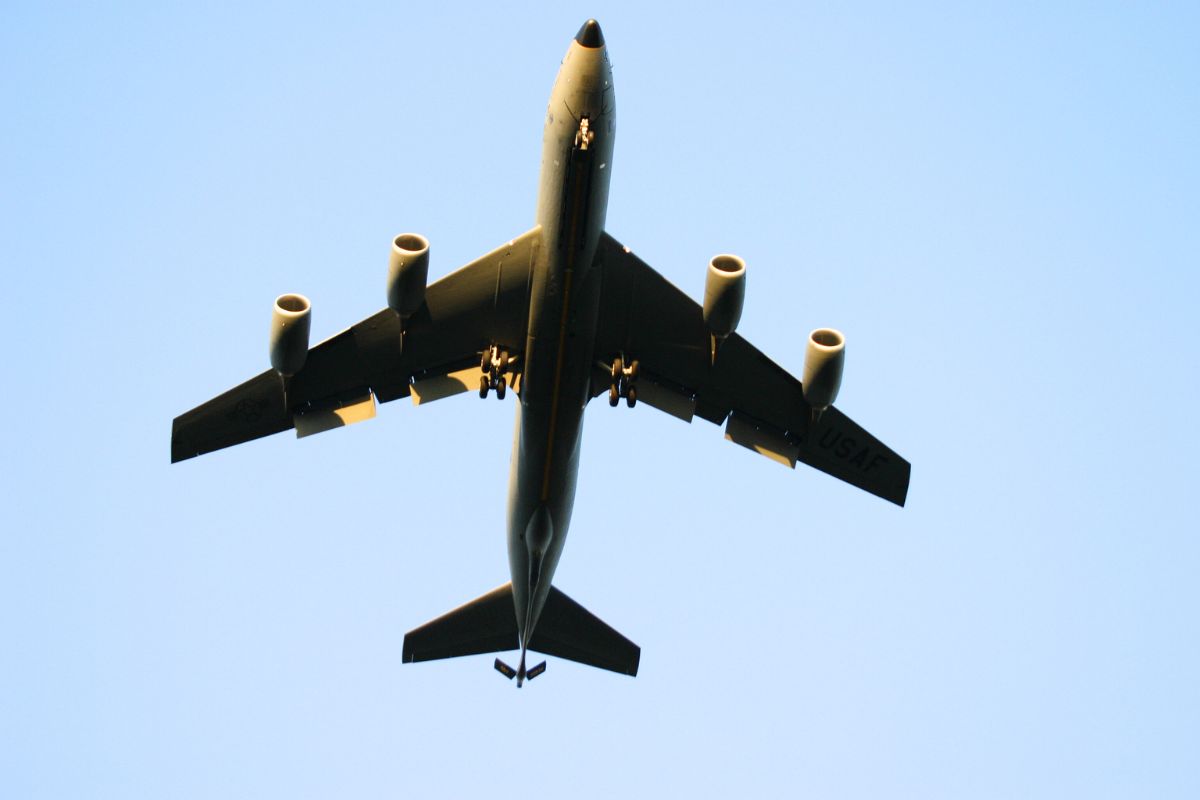
The U.S. Air Force remains virtually unchallenged, combining a vast multi-role fleet with strategic bombers, tankers, and the modern F-35 Lightning II. During the annual Red Flag exercises in Nevada, allied pilots routinely comment on America’s seamless integration of stealth and electronic warfare platforms (source: FlightGlobal).Russia (4,292 aircraft)
Despite an aging fleet of Su-27s and MiG-29s, Russia’s air arm stays formidable thanks to its strategic bombers like the Tu-95. However, attrition in recent conflicts has underscored the need for fleet renewal.China (3,309 aircraft)
Backed by a booming domestic industry, China produces advanced fighters such as the J-20 and a growing array of combat drones. Its investments in power projection—including long-range aerial refueling—signal ambitions that stretch well beyond regional waters.India (2,229 aircraft)
Bridging Russian legacy jets with Western buys like the Rafale, India’s air force is rapidly modernizing. I once met a squadron pilot in Bangalore who praised the HAL Tejas for its agility, underscoring New Delhi’s push toward indigenous fighter development.South Korea (1,592 aircraft)
Facing a persistent northern threat, South Korea fields F-35As alongside F-16s and is rolling out its home-grown KAI KF-21. The synergy of advanced sensors and networked operations keeps its peninsula defenses razor-sharp.Japan (1,443 aircraft)
Japan’s fleet of F-15s, F-35As, and Mitsubishi F-2s is slated for continuous upgrades. With a sixth-generation fighter program underway, Tokyo is doubling down on technological edge to safeguard its airspace.Pakistan (1,399 aircraft)
Leveraging both U.S.-made F-16s and co-developed JF-17s, Pakistan balances legacy platforms with selective modernization. Training exchanges with China and Europe underscore Islamabad’s drive to maintain operational readiness.Egypt (1,093 aircraft)
One of the Middle East’s largest air arms, Egypt’s mix of F-16s, MiG-29s, Mirage 5s, and Rafales ensures regional influence. Joint exercises in the Mediterranean highlight Cairo’s expanding strategic reach.Turkey (1,083 aircraft)
In pursuit of autonomy, Turkey is phasing in its own TF-K stealth fighter while upgrading its F-16 fleet. Ankara’s emphasis on defense industry self-reliance is reshaping NATO’s southeastern flank.France (976 aircraft)
France rounds out the top 10 with its celebrated Rafale multi-role jets and Airbus A330 MRTTs for aerial refueling. Yet, with fewer than a thousand platforms, it trails larger peers. I’ll never forget witnessing a Rafale demo over Paris—its performance was breathtaking, but on a global scale, sheer numbers matter too.
Conclusion
The 2025 rankings underscore the enduring dominance of the United States and the meteoric rise of China. Russia retains impressive scale, while Asian powers from India to South Korea press their modernization drives. For France, retaining a cutting-edge nuclear deterrent and elite capabilities will be crucial as it seeks to climb back up the list. As drone swarms, networked sensors, and electronic warfare redefine air combat, these rankings may look very different by 2030.