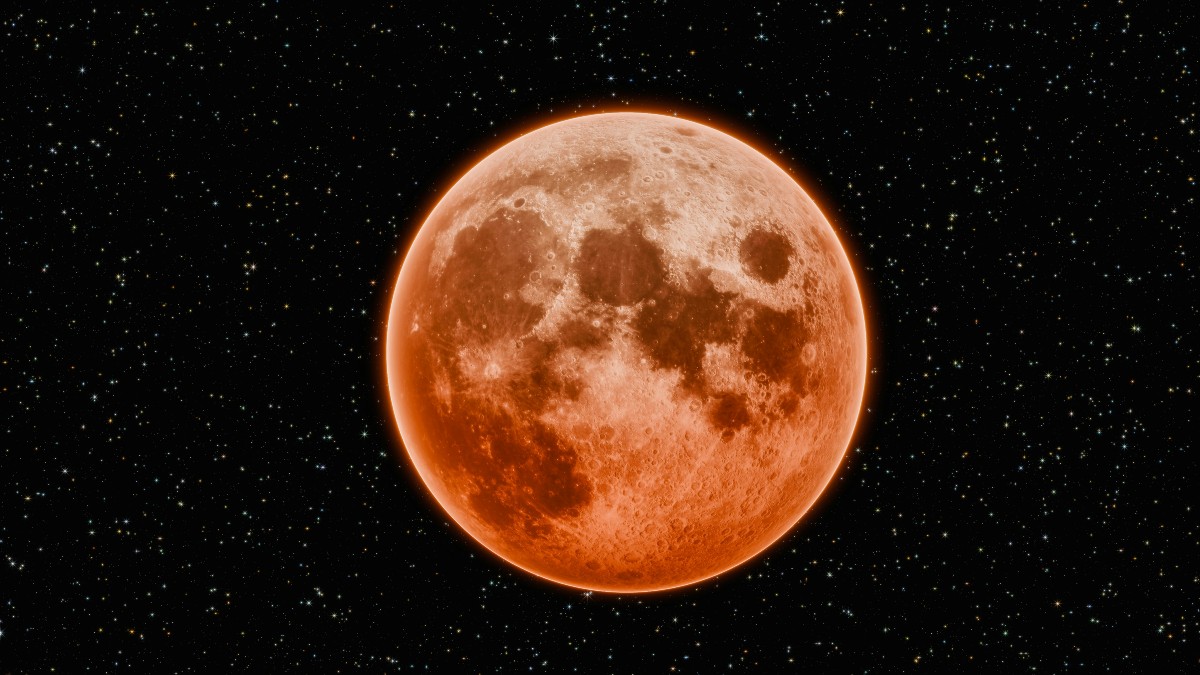
It turns out our Moon isn’t just a lifeless rock quietly orbiting Earth. Deep beneath its surface, scientists have found evidence of a massive, jelly-like layer slowly moving—its motion driven by the gravitational pull of both Earth and the Sun.
A lunar tide beneath the surface
Researchers from NASA’s Goddard Space Flight Center and the University of Arizona have detected a partially molten layer wedged between the Moon’s rocky mantle and its metallic core. The team describes its consistency as similar to sticky jelly, shifting up and down in a rhythm much like ocean tides on Earth.
Just as the Moon’s gravity causes our seas to rise and fall, Earth—and to a lesser degree, the Sun—induces subtle “tidal” movements within the Moon’s interior. According to the study, published in AGU Advances, this is the first measurement of the Moon’s annual gravitational variations caused by internal tides.
How the discovery was made
No one drilled into the Moon to find this layer. Instead, scientists analysed data from NASA’s GRAIL (Gravity Recovery and Interior Laboratory) mission, which mapped the Moon’s gravitational field, and the Lunar Reconnaissance Orbiter, which has been collecting detailed surface and environmental data since 2009.
Their findings only made sense if a huge, softer zone exists at the base of the mantle—beneath the crust of magnesium silicate and pyroxene. This partially molten region likely plays a role in the Moon’s thermal state and could reveal clues about its early formation.
Questions scientists still can’t answer
The discovery raises more questions than it answers. What is this layer made of exactly? How has it stayed warm enough to remain semi-molten for billions of years? And how does it influence the Moon’s geological evolution?
For now, those answers remain out of reach. Confirming them would require deep drilling—either by future astronauts or advanced robotic missions capable of returning core samples to Earth.
A new chapter in lunar science
We’ve long believed we understood the Moon’s basic structure, but this finding hints at hidden complexity beneath its surface. Understanding this molten layer could help scientists refine models of the Moon’s origin, internal dynamics, and even its tectonic behaviour.
As one researcher put it, “We’ve been looking at the Moon for millennia, but there’s still so much happening beneath our feet—or in this case, beneath the regolith—that we’ve only just begun to uncover.”