I’ll admit I’ve always been drawn to caves—there’s something about descending into cool darkness that feels like stepping back in time. But nothing prepared me for the day I learned that deep beneath Mammoth Cave’s winding passages lay the remains of 325-million-year-old sea monsters. These aren’t Hollywood fantasies—they’re real, prehistoric shark fossils that have experts buzzing.
Prehistoric Shark Fossil Puzzle
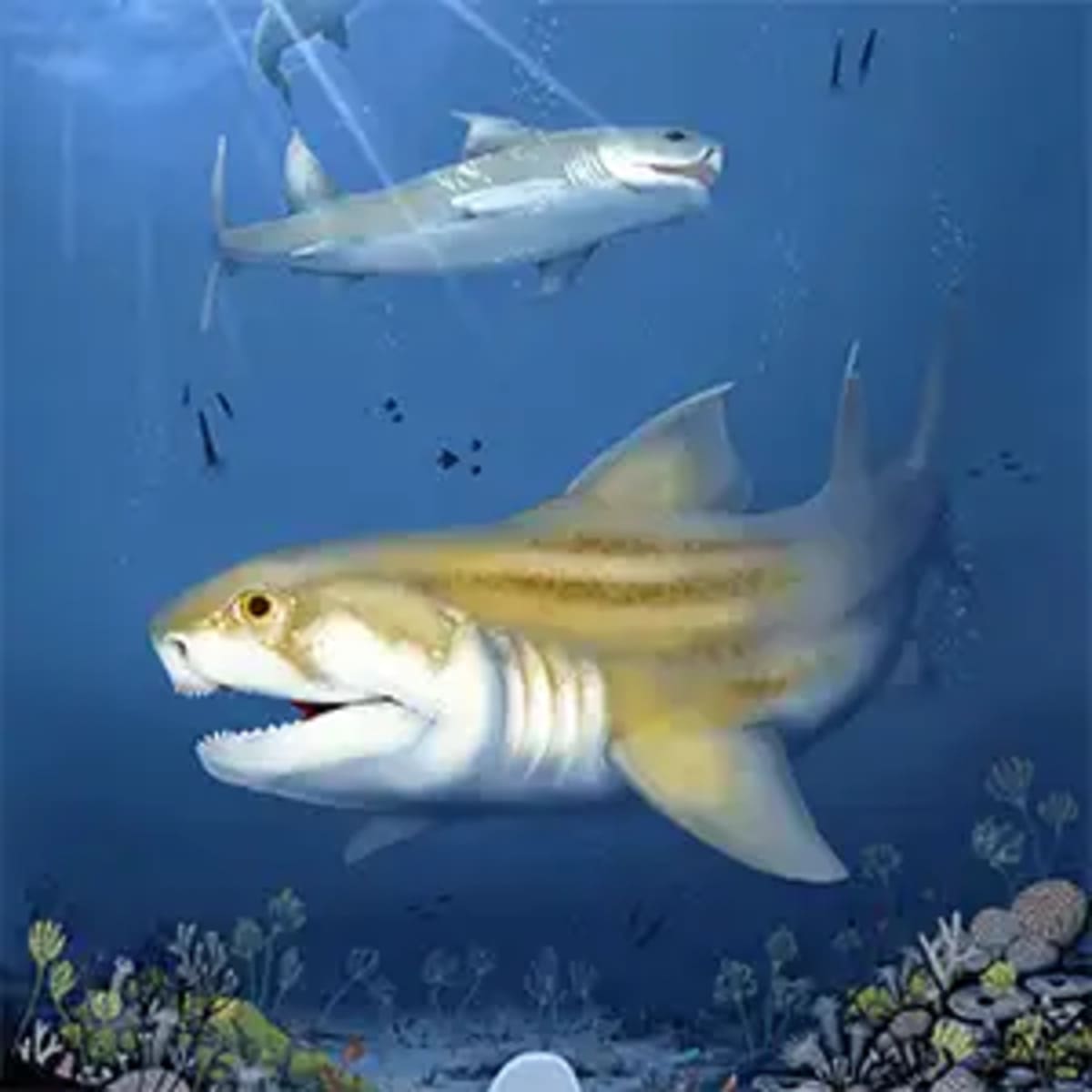
During a recent survey of limestone outcrops in Mammoth Cave National Park, researchers from the National Park Service Paleontology Program and the Maryland–National Capital Parks and Planning Commission (MNCPPC) uncovered two species of ctenacanth shark: Troglocladodus trimblei and Glikmanius careforum. Each measured roughly 10–12 feet long—about the same size as today’s oceanic whitetip shark. According to ancient shark specialist John-Paul “JP” Hodnett, “Finding intact jaw fragments and tooth sets in this environment is exceptionally rare,” because shark cartilage usually erodes long before it can fossilize.
Collaborations and Fieldwork
“Every new discovery at Mammoth Cave is possible thanks to teamwork,” says Park Superintendent Barclay Trimble. I remember joining one expedition as a volunteer—wriggling through narrow crawlways alongside members of the Cave Research Foundation, headlamps bobbing, hearts pumping. It was in one of those tight passages that Trimble first spotted a lone T. trimblei tooth back in 2019. Since then, geologists, cavers and paleontologists have coordinated meticulously to map, photograph and carefully retrieve each fragile specimen.
Fossils Help Trace Evolutionary Change
These sharks swam in the Mississippian Period when eastern North America was submerged beneath a warm, shallow sea. The branching tooth structure of T. trimblei suggests it hunted mid-sized prey, while the robust jaw of G. careforum hints at a diet that included squid-like orthocones. By tracing these fossils across multiple rock layers, researchers can chart how rising and falling coastal waters—as continents drifted toward Pangea—shaped marine biodiversity. “Each specimen fills in a missing piece of the evolutionary timeline,” notes a recent report in the Journal of Vertebrate Paleontology.
How to Preserve Shark Fossils ?
Extracting shark cartilage requires a surgeon’s touch. During fieldwork, teams spent hours stabilizing each fragment with consolidants, knowing that one wrong move could pulverize the delicate tissue. The cave’s stable temperatures (hovering around 54°F) were a blessing, slowing decay and preserving organic details that normally vanish. Today, the park’s conservation guidelines emphasize minimal disturbance: every footprint, drill hole and pack-string is carefully planned to protect these ancient treasures.
Why These Fossil Sharks Matter ?
Beyond their dramatic size, T. trimblei and G. careforum offer fresh insights into how early shark lineages diversified. As the supercontinent Pangea coalesced, marine habitats transformed, and sharks had to adapt or disappear. By comparing Louisiana and European Mississippian sites, scientists are uncovering global patterns of shark evolution that were previously only theoretical. These finds help explain why modern sharks occupy such varied ecological niches today.
Future Cave Explorations
If my own spelunking taught me anything, it’s that the next breakthrough often lies around an uncharted bend. Researchers are now deploying spectral imaging and 3D mapping tools to peer into tunnels too narrow for human passage. Who knows what other ancient creatures remain hidden in the world’s largest cave system? One thing’s for sure: Mammoth Cave’s dark corridors still have stories to tell, and these prehistoric sea monsters are just the beginning.